
The Shift in Perspective
The most interesting and different thing about my job right now is that I’ve moved from being the Client to working as a Consultant. Not too long ago, I was the one sitting at the receiving end of project updates and deliverables. Now, the tables have turned, and I find myself on the other side.
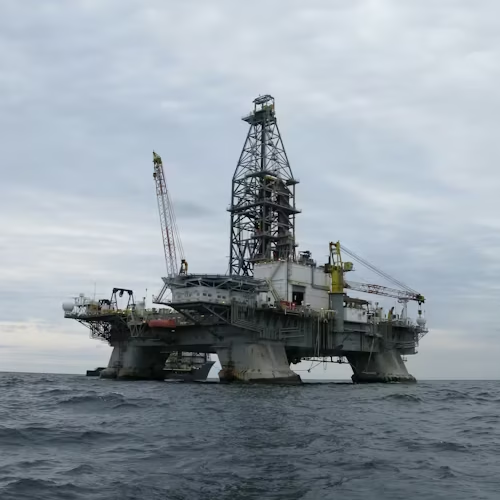
As the client, I enjoyed the comfort of being the end-user, setting requirements, and expecting timely results. But as a consultant delivering on projects, I’ve quickly realized how challenging it can be to meet those expectations — especially for large-scale energy and infrastructure projects.
The Multinational Experience
Working for a huge multinational brings with it the sense that anything is possible. The projects are big, the investments are significant, and the stakes are even higher. Suppliers and partners know the value of such clients, and the responsibility to deliver grows tenfold.
Now, managing two projects for a global company, I’ve come to appreciate the delicate balance between quality delivery, timelines, and client satisfaction. It has taught me that consulting is not just about technical expertise — it’s about relationships, communication, and trust.
Lessons Along the Way
“Many people have the notion that enlightenment is one state. Many also believe that when it is attained, a person is forever in that state.” — Paul Farmer
This quote resonates with me because the consulting journey is not static. Every project, every client, and every challenge adds a new layer of learning and growth.
Here are some key takeaways so far:
-
Collaboration matters: Success depends on engaging the right teams, building trust, and leveraging collective expertise.
-
Content & communication are powerful: Clear insights and reporting create alignment between consultants and clients.
-
Measuring impact is essential: ROI isn’t just about money; it’s about long-term value created for the client.
Broader Impact
Interestingly, consulting lessons also apply to other industries, from agriculture to energy logistics. For instance:
-
Improving agricultural productivity requires both technical innovation and client collaboration.
-
Effective pest management in farming mirrors the risk management strategies in oil & gas.
-
Input optimization in agriculture is much like efficiency optimization in engineering projects.
The principles remain the same: analyze, adapt, and deliver measurable value.
A New Chapter
It’s been a while since I last shared updates, but the gap was for good reason. Moving to Johannesburg and starting a new role in engineering consulting has been both exciting and transformative. The journey from being a client to becoming a consultant has given me a new appreciation for the industry and the people who drive it.
This new chapter reminds me that growth comes from stepping outside of comfort zones — and embracing challenges with purpose.